
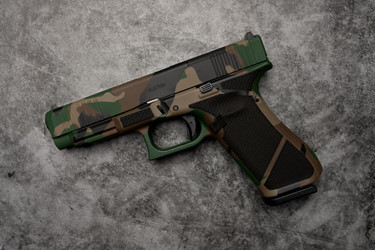
The Cerakote Process Explained — What Really Happens to Your Gun When You Drop it Off?
Posted by Zac Harward on Apr 27th 2026
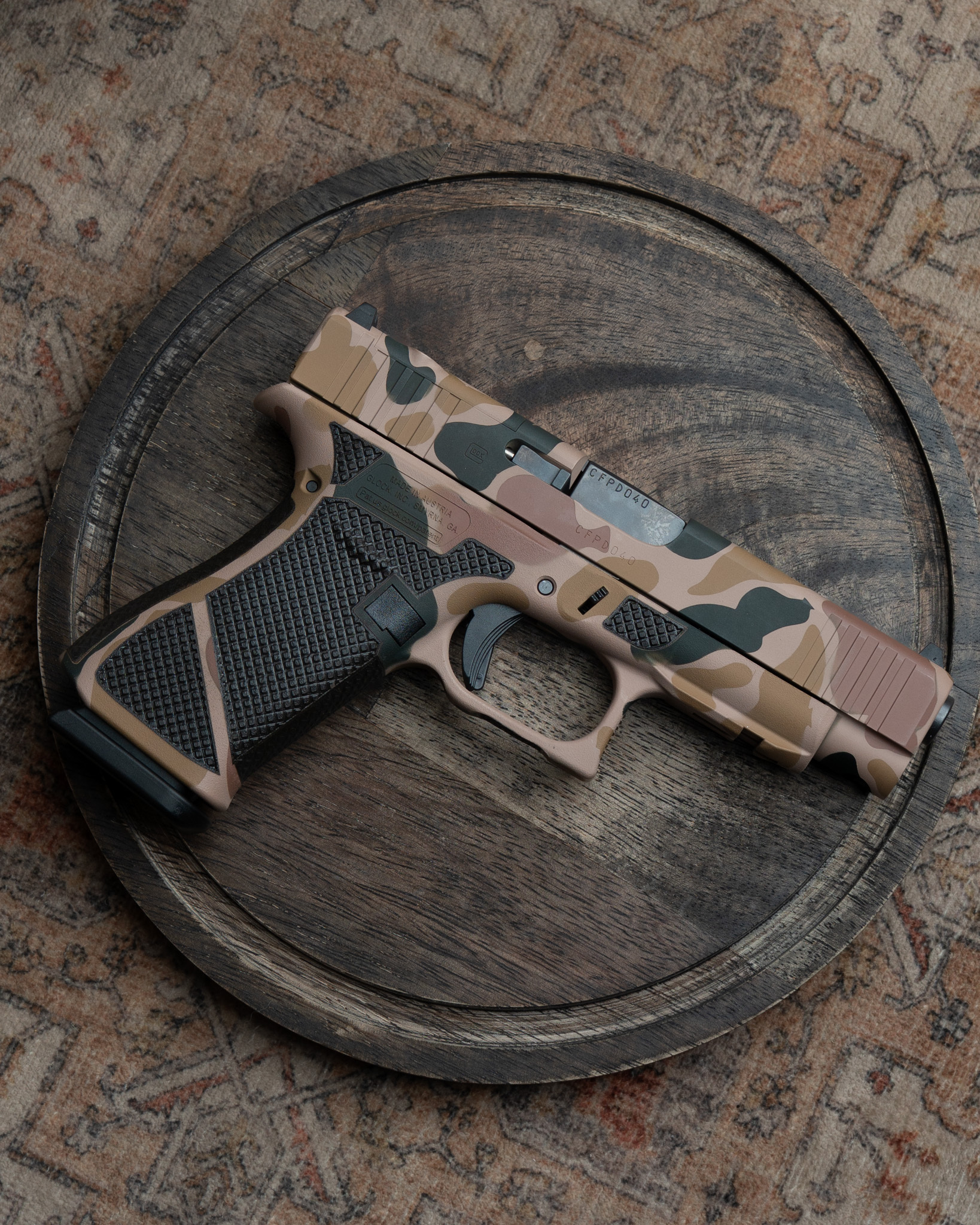
If you've been thinking about getting your firearm Cerakoted but aren't quite sure what happens once you hand it over, you're not alone. For a lot of first-timers, dropping off a firearm — especially one you've carried for years or that holds sentimental value — can feel a little uneasy. The good news? Here's exactly what happens from the moment you walk in the door or ship your project in until the moment you receive it back.
Step 1: The Work Order and Consultation if needed
Ready to get a project rolling? Awesome! Our first step is to fill out a work order. We have an online work order system that makes filling it out a breeze. You head over to the work orders section of our website and fill your work order out as thoroughly as possible. Once you submit your work order, a copy is emailed to you and a copy is sent to our internal database. At this point, if you are out of town, you can mail your project to us, or if you are local you can swing by our store in Burlington, NC and drop your project off. Our team logs your project into our logbook, takes photos for our internal tracking system, prints your work order, and the process begins.
Before anyone touches your firearm, our team thoroughly reviews your work order to make sure we are all on the same page. If there are any questions whatsoever, someone from our team will be in contact to make sure we have all of the details correct. We'll also do a quick inspection of your firearm at this stage. If we notice anything that needs attention before the coating process begins — worn parts, existing damage, or anything that could affect the outcome — we'll let you know before we proceed. No surprises.
Step 2: Complete Disassembly
Once we're ready to get started, your firearm is completely disassembled if needed — and we mean completely. Every pin, spring, screw, and component is removed individually. This isn't just thoroughness for its own sake; it's essential for a quality finish. Coating an assembled firearm would leave gaps, trap debris in moving parts, and cause problems down the road.
Every part is organized and tracked so reassembly goes smoothly later. Think of it like taking apart a watch — everything has its place, and we keep close track of all of it.
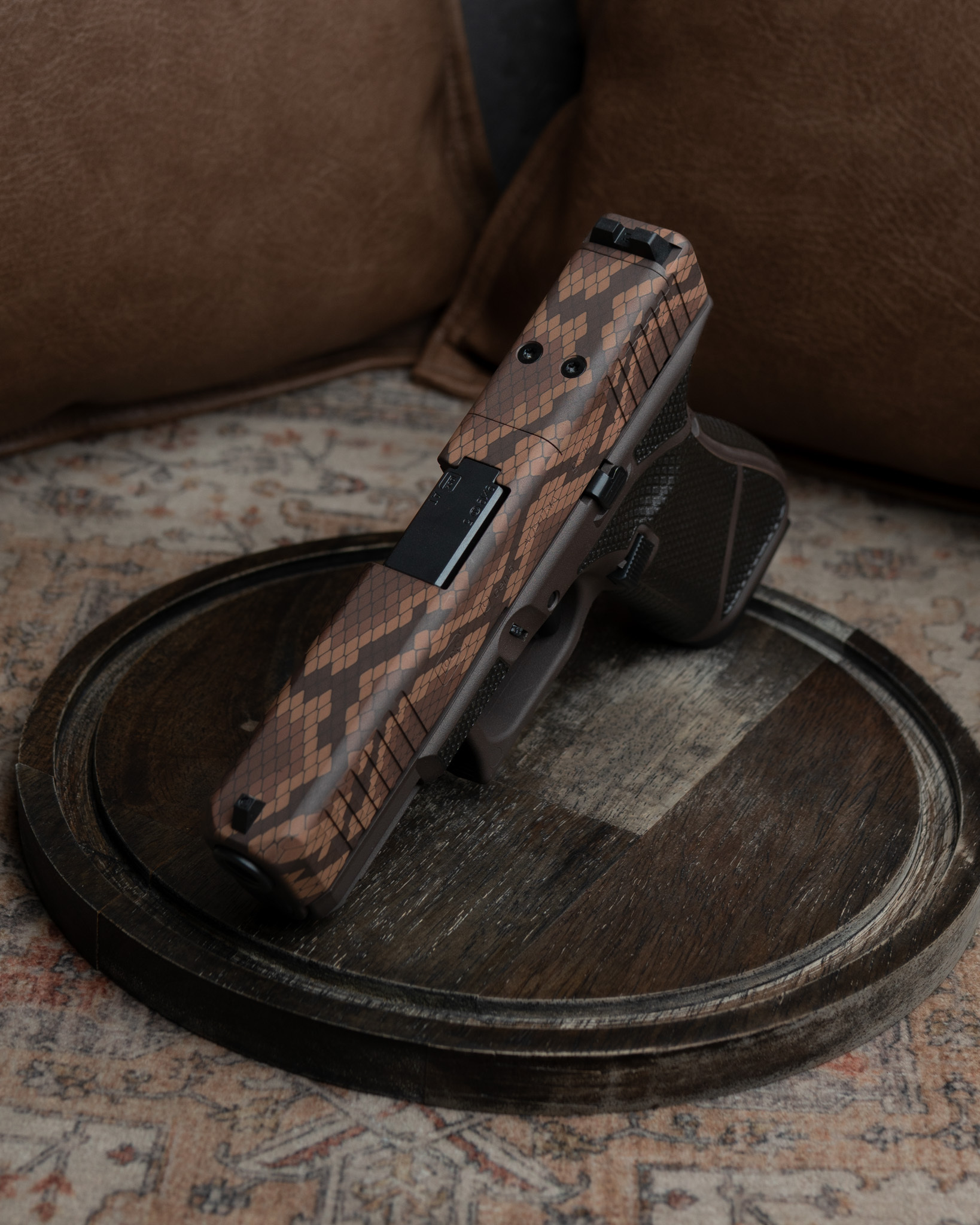
What about critical components? Certain parts like triggers, sears, safeties, disconnectors, and the inside of barrels and chambers are intentionally left uncoated. These are precision-fit components where even a fraction of added thickness could affect function and safety.
Step 3: Thorough Cleaning and Degreasing
Before any surface work begins, every part that's going to be coated goes through a deep cleaning process. Your parts are ran in our heated ultrasonic cleaners at 170 degrees for 25 minutes using aircraft grade detergent. After the cycle, your parts are rinsed with fresh water and left to air-dry.
This step matters more than most people realize. Even a fingerprint left on a part can interfere with how well the Cerakote bonds to the surface. Clean hands, clean parts, clean results — it's that straightforward.
Step 4: Masking (If needed)
Before blasting, any areas that should remain free of coating are carefully masked off. This includes tight-tolerance surfaces like threaded areas, the bore, and specific contact points between parts. High-heat masking tape is used so it can withstand the oven curing process later.
This step takes patience and precision. Done right, it means your firearm functions exactly as it did before — just protected and looking sharp.
Step 5: Abrasive Blasting (Surface Prep)
Here's where the real foundation gets laid. Once clean, each part is blasted with 100 grit aluminum oxide media. When we sandblast- it's a controlled process that removes any existing finish and creates a microscopic texture on the surface.
That texture is called a "mechanical tooth," and it's what gives Cerakote something to grip onto at a molecular level. Without it, even the best coating won't last. The quality of the blast prep directly determines the quality and longevity of the final finish.
For polymer or plastic parts, the blasting is done at lower pressure so the material isn't damaged — just properly profiled for adhesion.
Step 6: Coating Application
Now comes the part most people picture when they think of Cerakote. Using a professional HVLP spray gun, one of our applicators catalyzes and applies the coating in thin, even layers across each part. The coating itself is a polymer-ceramic composite that goes on at approximately .001 inch thick — thin enough to preserve tolerances, tough enough to outlast traditional firearm finishes.
For single-color jobs, this is a straightforward pass across each component. For multi-color or pattern work — think two-tone finishes, camo patterns, or custom designs — this stage involves careful layering, stenciling, and masking between colors to build the final look.
After application, parts are allowed to "flash off" for 10 to 15 minutes. This brief drying period lets the solvents begin to evaporate. If you don’t allow the solvents to evaporate, you can end up with different sheen levels.
Step 7: Curing in the Oven
This is what separates Cerakote from spraypaint. Once coated, all parts are hung in a professional curing oven and baked at controlled temperatures — typically around 250°F for metal components and lower temperatures (175–200°F) for polymers.
The bake typically runs for about two hours. This heat-curing process is what activates the ceramic chemistry in the coating, creating that rock-hard, corrosion-resistant, scratch-resistant finish Cerakote is known for. Without proper curing, you'd just have a nice-looking coating that wears off quickly. With it, you have something that can handle years of hard use.
After baking, parts are set aside to cool.
Step 8: Quality Inspection
Once cooled, every part is carefully inspected before reassembly begins. We check for consistent coverage, proper coating thickness, and any imperfections. If anything doesn't meet the standard, that part goes back through the process — no shortcuts, no exceptions.
This is the step that separates a professional Cerakote job from a DIY one. Having trained eyes on every component before it goes back into your firearm is what ensures you get back something you're genuinely proud of.
Step 9: Reassembly (if needed)
With every part inspected and approved, your firearm is carefully reassembled. Moving components are test-fitted to confirm everything functions as it should. If anything feels tight due to the added coating thickness — which occasionally happens in extremely tight-tolerance builds — it gets addressed before your firearm leaves the shop. If you get disassembly and reassembly through us, we handle all of the fitting for you.
Step 10: Final Check, Photos, Invoice, and Pick-Up or Shipping
Before you get your firearm back, we do one last look-over — verifying function, finish consistency, and overall quality. We then send your project to the photo booth. We take professional quality project photos and attach it to your invoice. If we are shipping your project, we will send you tracking at the same time.
How Long Does the Whole Process Take?
Turnaround times vary depending on the scope of the project and current shop volume, but a standard single-color job typically takes anywhere from a few days to a couple of weeks. Custom multi-color or pattern work may take longer. We'll always give you a realistic timeline at drop-off so you know what to expect and we keep the current turnaround times posted on the banner at the top of our website’s home page.
Ready to Get Started?
Now that you know exactly what happens to your firearm during the Cerakote process, we hope any hesitation you had is gone. Your firearm is in skilled hands from start to finish, and the result is a durable, professional-grade finish that protects your investment for years to come.
Contact Weapon Works LLC today to discuss your project, get a quote, or just ask questions. We're happy to walk you through anything.
WeaponWorksLLC — Professional Cerakote Coating Services